
Most of us have experienced it.
Before an interview, your appetite disappears. Before difficult news, your stomach drops. During a stressful week, your digestion changes.
You haven’t eaten anything different.
So why has your gut changed?
The answer is that your gut isn’t waiting for food to tell it what to do.
It is constantly listening to your brain.
Your brain and gut are connected through a two-way communication system called the gut–brain axis. One of the main communication pathways is the vagus nerve, which carries messages between the brain and digestive system throughout the day.
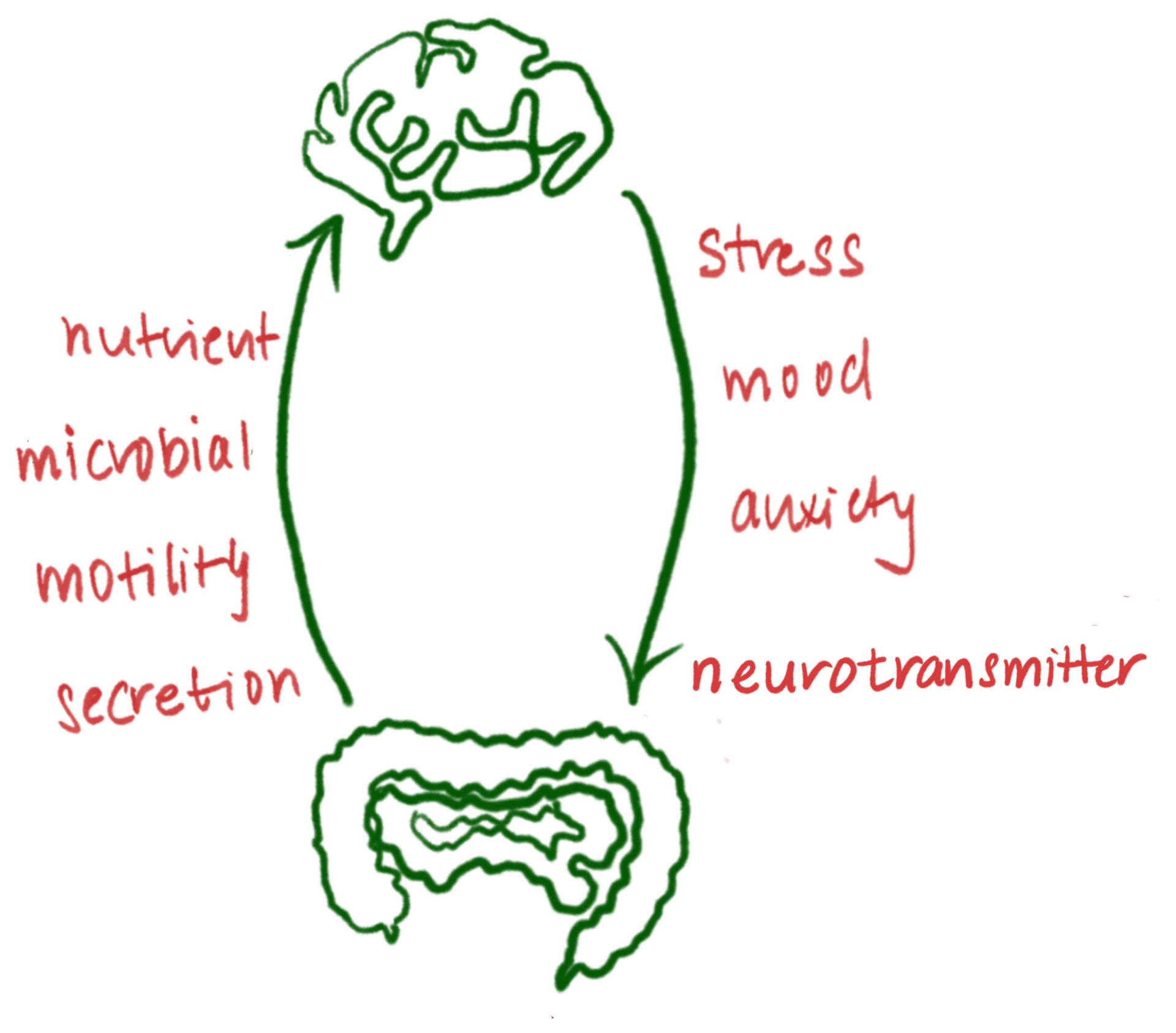
This means your gut is responding to more than what you eat.
It is also responding to what your brain believes is happening around you.
When your brain senses safety, the vagus nerve helps coordinate digestion. Stomach acid is released, food moves through the digestive tract, and digestion generally works more efficiently.
When your brain senses prolonged stress, uncertainty or danger, those messages change. Digestion may slow down, speed up or become more sensitive. You may notice bloating, nausea, pain, constipation or diarrhoea, not because your gut is “imagining” symptoms, but because it is adapting to the state of your nervous system.
Why therapy can help
This is why mental health and gut health cannot always be separated.
Your thoughts do not directly cause gut symptoms.
But the state of your nervous system can influence how your digestive system functions.
That is also why therapy can be a valuable part of treatment.
Therapy does not replace medical care or treat digestive disease. Instead, it helps reduce the ongoing stress and nervous system activation that may be shaping how your gut functions day to day.
The gut and the brain are not two separate systems.
They are having the same conversation.
At In Relation, we work alongside your medical team to support the emotional impact of chronic gut symptoms and help you develop the skills to better regulate your nervous system. Our aim is to help you build a steadier relationship with both your mind and your body.
Book Now